
Picking a model used to mean staring at benchmark soup. One score here. Another there. A vision result in a different column entirely.
Different tests. Different scales. Half of them reported by the vendor selling you the model.
So "which model is best for coding?" quietly became "which benchmark did I happen to open?"
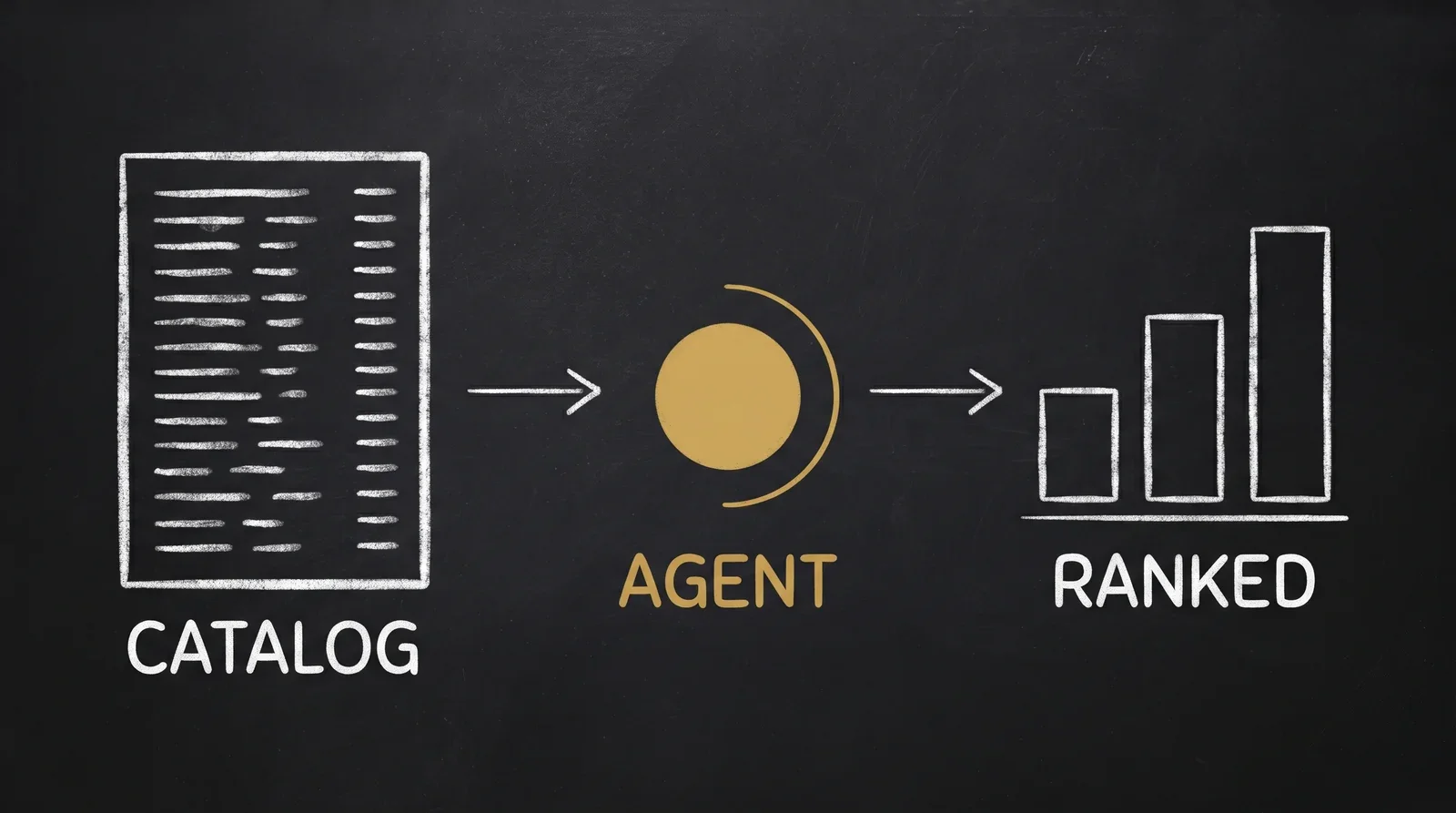
I got tired of that question. So I rebuilt the SpiderGate model catalog around two ideas. An agent keeps the facts current. Every score is a percentile you can act on.
An agent does the reading
The catalog tracks 1,216 models across 16 providers, as of 9 August 2026. Keeping that current by hand is nobody's job.
So an enrichment agent runs it every day. It pulls specs and pricing from OpenRouter's public API. It pulls benchmark results from LLM-Stats. It pulls lineage — who built a model, when, under which licence — from Wikidata.
Every field it writes carries a provenance stamp: which source, and when it was fetched.

It ran this morning at 05:00. That is not a figure of speech. That is the timestamp on the newest row.
The agent never overwrites a human. Write editorial copy for a model and that row is marked curated, and the daily sync leaves it alone. 255 models carry that hand-written layer today.

A second loop watches the edges. It reads a community index of free LLM endpoints and flags providers we do not track yet. So far: 96 free model entries across 27 providers, 16 raised for review.
Nine categories, scored as a percentile
Benchmarks do not compare. An 82 on GPQA and an 82 on SWE-Bench are not the same 82. Average them and you get a number that means nothing.

So the catalog scores nine capability categories instead: Coding, Design/Frontend, Reasoning, Math, Vision, Research, Tool Use, Chat and Translation.
Behind them sit 454 signals that map a benchmark to a category, fed by 4,821 benchmark results from LLM-Stats and DesignArena.
Each score is a within-category percentile — where a model ranks against every other model we can score in that category. Not a raw mean. "Top 5% for coding" is a sentence you can act on. "82.4" is not.
Open any score and you see the benchmarks under it, with vendor-reported numbers flagged as vendor-reported.
The number I would rather round up
221 of the 1,216 models are scored. That is about 18%.
I would rather tell you that than round it. A model scores only when real benchmarks exist to score it on. Everything else is marked not scored yet — not ranked last.
Pretending to know is worse than saying I do not.
Where to see it
Open Models in your SpiderGate dashboard. Filter by a capability chip. Sort by the category score. Hover any bar to read the benchmarks behind it.
Your agents read the same catalog through the gateway. An agent picking a model for a task ranks it the way you would.
The taxonomy is editable at runtime. When a benchmark starts mattering, I map it and every score recomputes — no deploy, no wait.
Stop guessing. Rank by the capability you actually care about.